PRESS RELEASE: In Wake of Mass Hunger Strike, Conditions at North Lake Processing Center Draw International Condemnation and Concern

For Immediate Release: Monday, May 18th, 2026

Contact: No Detention Centers in Michigan, info@nodetentioncentersmi.org

Baldwin, MI — A month after hundreds of people held in immigration detention at the North Lake Processing Center launched rolling hunger and work strikes across multiple units in response to inhumane conditions, inadequate medical care, and legal delays, new reports and organizing have continued to highlight the urgency of their unmet demands.

Owned and operated by the Florida-based GEO Group since its construction as a for-profit youth prison in the late 1990s, North Lake is currently the largest detention center in the Midwest. The strikes beginning last month—which spread without formal leadership and were met with threats of retaliation from GEO staff—echo earlier chapters in the facility’s history. Extensively documented hunger strikes at North Lake in 2020 led to blanket denials from the GEO Group, just as Immigration and Customs Enforcement attempted to deny recent actions despite participants’ testimony to attorneys, family members, and reporters.

The partnership between GEO and ICE has faced new scrutiny in the past week following the announcement that David Venturella, a former GEO executive, will lead the federal agency

“People suffering in detention in Baldwin launched these strikes at great risk to their own health, and held on as long as possible despite GEO employees threatening them with transfer to other facilities,” said Ale Rojas of No Detention Centers in Michigan. “This act of bravery was a plea for connection. By denying themselves a human need, they hoped we would listen to the message they sent—we are in pain, suffering, being killed, underfed, untreated, isolated, and our humanity is being ignored; please do not look away. In response, people around the state, the country, and the world have expressed solidarity with those who undertook this action, as well as horror at the conditions that prompted it.”

Those conditions received further attention in a letter regarding North Lake sent last week to the Detroit ICE Field Office by the ACLU of Michigan and the Michigan Immigrant Rights Center. The letter details numerous instances of “the denial of adequate medical care, which threatens the health and lives of all individuals held there; restrictions on attorney access, which severely limit the ability of individuals to exercise their fundamental rights to seek release from detention and pursue legal relief; and interference with access to immigration proceedings.” Responding to another example of denial of medical care, on Monday advocates called North Lake en masse to demand that an immigrant with mental health challenges receive his prescribed psychiatric medication.

In a related decision likely to affect thousands of immigration cases in Michigan and three other states, the 6th Circuit Court of Appeals joined two other federal appeals courts last week in declaring the Trump administration’s “mandatory detention” policy unconstitutional and affirming the right to bond hearings. Even with such hearings, however, many immigrants like Byron Martinez of Grand Rapids—whose violent detention by ICE in conjunction with the Grand Rapids Police Department inspired a support campaign led by Movimiento Cosecha Grand Rapids and GR Rapid Response to ICE—have ultimately seen their requests for bond rejected. Martinez, who has been detained at North Lake for over 100 days, was denied asylum on Friday, May 15th.

On Sunday, around 50 protesters gathered outside the prison in Baldwin to amplify the still-unmet demands of the strikes. Statements were shared from a woman who had recently been released from North Lake, from organizers working against ICE’s plans to open a new warehouse detention facility in Romulus, and from Amu Gib, an incarcerated UK activist and member of Palestine Action who took part in a 50-day hunger strike last year, stressing intersections among global struggles against detention, border regimes, and militarism.

“In December 2025, Nenko Stanev Gantchev was killed in North Lake,” Gib observed in their statement, recorded on April 27th, “the same way Jimmy Mubenga was killed by G4S. This is not the only way. Migration is life.” Acknowledging the hundreds of participants in the strikes in Michigan, Gib added: “We must take seriously their urgent call for liberation—not just of their individual bodies, but of the borders that cage the face of the earth. The deadly logic of the empire, of the nation-state, becomes: ‘Live for me, die for me, or kill for me’’; and the hunger striker replies, in simple terms, ‘We do not belong to you. We refuse your borders. In our hearts we will be free; in our bodies we will wake up and ache for our lives.’

###


No Detention Centers in Michigan is a statewide coalition organizing to abolish immigration detention and migrant incarceration in Michigan and beyond.
Rest in Peace, Nenko Stanev Gantchev

We are devastated to hear of the preventable death of Nenko Stanev Gantchev on Monday at the North Lake Processing Center in Baldwin. No one should have to die behind those walls.

And we are deeply troubled, but not surprised, by the echoes of past events at this facility. In recent weeks, we’ve heard many disturbing reports of inadequate medical care and outbreaks of contagious illnesses at North Lake. Whatever the full story of Nenko’s death may be, what we know for sure is that prisons and detention centers, by their nature, create the conditions for medical crises to develop and pose grave threats to the health of incarcerated people and the communities around them. Detention is deadly.

We saw this in 2020, when the GEO Group’s response to the onset of the COVID-19 pandemic included denying access to essential protective equipment, giving incarcerated people false information, and punishing hunger strikers by shutting off their clean water. This mismanagement, compounded by the Bureau of Prisons’ reckless decision to continue chaotic transfers from one facility to another, led to multiple deaths at North Lake.

At that time, the facility was a federal immigrant-only prison—another facet of the same deportation machine—and the BOP had a national map that purportedly showed COVID cases among the population in federal custody. For months, as desperate families sought updates on their loved ones, North Lake was not on the map. It was a shadow prison. Now it is an ICE detention center, and, needless to say, medical care for people held there has not improved. The lack of appropriate care and other appalling conditions faced by people caged there for profit by the GEO Group are emblematic of the U.S. immigration detention system and its inherent terror and cruelty.

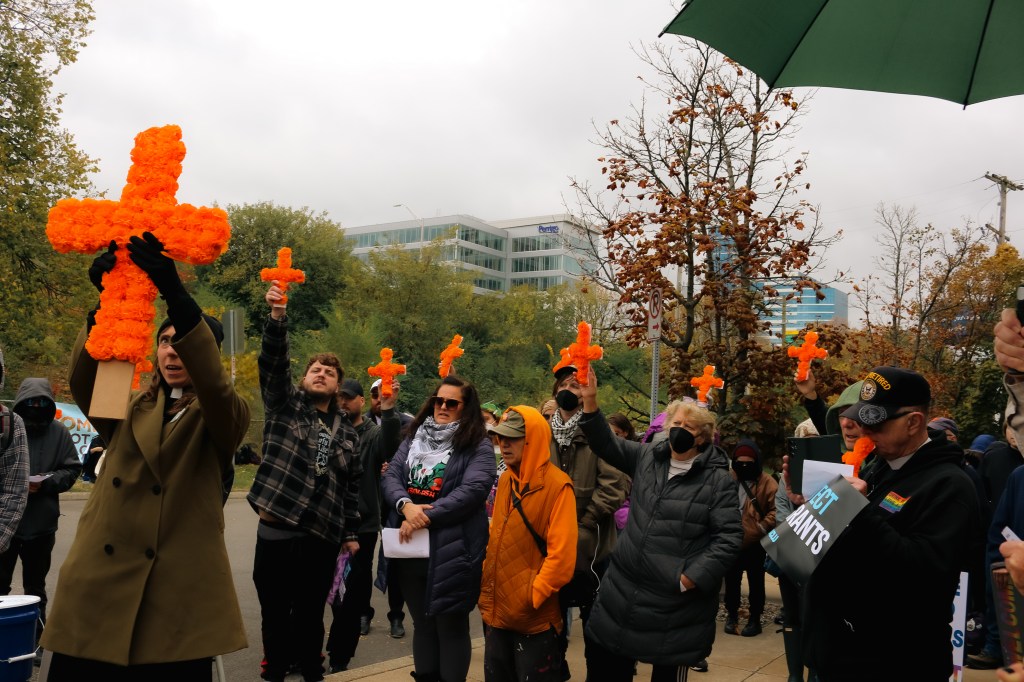
On November 1st, the Day of the Dead, we held a vigil in Grand Rapids and joined immigrant advocates around the country in honoring 25 lives lost in ICE custody since the beginning of the second Trump administration. We fear that this number will continue to rise until we collectively free them all. As we work to find answers and tangible next steps, we must remember that there is no good reason for North Lake or any such facility to exist, that scapegoating our immigrant neighbors is not a solution for anyone, and that a world that affirms everyone’s safety, dignity and humanity is possible.

¡Nenko Stanev Gantchev, Presente!

PRESS RELEASE: Immigrant Rights Advocates in Grand Rapids Hold Day of the Dead Vigil to Honor Lives Lost in ICE Custody

For Immediate Release: Monday, November 3rd, 2025

Grand Rapids, MI — On Saturday, November 1st, No Detention Centers in Michigan, Movimiento Cosecha GR, GR Rapid Response to ICE, and the ACLU of Michigan brought over 100 people together for a vigil at the downtown field office of Immigration and Customs Enforcement (ICE) as part of Detention Watch Network’s Day of the Dead National Actions to remember and honor lives lost to immigration detention. Solidarity vigils and actions around the country recognized that at least 25 deaths have occurred in ICE custody in just nine months, a record number within a calendar year since 2006, including three deaths by suicide.

“The inhumane conditions inside these centers, whether state-run or privately operated for profit, have claimed lives,” said Gema Lowe, an organizer with Movimiento Cosecha GR. “These are places where pain is monetized, where medical neglect and institutional indifference have become a death sentence. We are here to demand the closure of all detention centers. But we are also here to turn our grief into strength. To cry for immigrants torn from their families is to honor them, but to fight for justice is to keep them alive.”

Organizers and faith leaders stressed that West Michigan immigrant communities continue to face intensifying ICE violence in connection with the June reopening of the GEO Group’s North Lake Processing Center in Baldwin, 65 miles north of Grand Rapids. Currently the largest detention center in the Midwest, North Lake has seen worsening conditions in recent weeks, with reports of chaotic transfers, long lockdowns, unsanitary water, and inedible food, as it approaches its full capacity of 1,800. Consistent with a long and well-documented history of abuse and neglect, North Lake’s previous use by the federal government as an immigrant-only prison led to at least six hunger strikes and the loss of multiple lives, including that of Félix Repilado Martínez, whose death from COVID-19 in May 2020 was disturbingly mishandled and misrepresented by the GEO Group.

Immigration justice advocates led by Witness Baldwin also gathered outside North Lake on Saturday afternoon. Attendees at the vigil in Grand Rapids heard the names of 25 immigrants who died in ICE custody in the past year, as well as a recording from one person recently released from North Lake on a habeas corpus petition and a Day of the Dead message recorded by another immigrant who remains in detention.

“We need to be resisting what ICE is doing every day in this community,” said Jeff Smith, a member of GR Rapid Response to ICE, who noted that local groups have launched a boycott of businesses owned by Grand Rapids Mayor David LaGrand over his refusal to back concrete sanctuary policies that would limit ICE activity in the city. “Rapid Response works directly with Movimiento Cosecha, and we do the defensive work, which means trying to reduce the level of harm being directed at the affected community. This is what we can do to prevent having to come back here every year and read another list of names of people who died in detention. La lucha sigue.”

“Detention is deadly. People in immigration detention are describing it as ‘hell on earth’ because it is. What we’re seeing now is a heightened cruelty under the Trump administration,” said Nanci Palacios, Organizing and Membership Director at Detention Watch Network. “Our message is clear: Immigrant lives are of value, and immigrants deserve safety, dignity and respect. We mourn the loss of life in ICE custody, valued loved ones who deserved to return to their families alive.”

###

No Detention Centers in Michigan is a statewide coalition organizing to abolish immigration detention and migrant incarceration in Michigan and beyond.

Detention Watch Network (DWN) is a national coalition building power through collective advocacy, grassroots organizing, and strategic communications to abolish immigration detention in the United States.